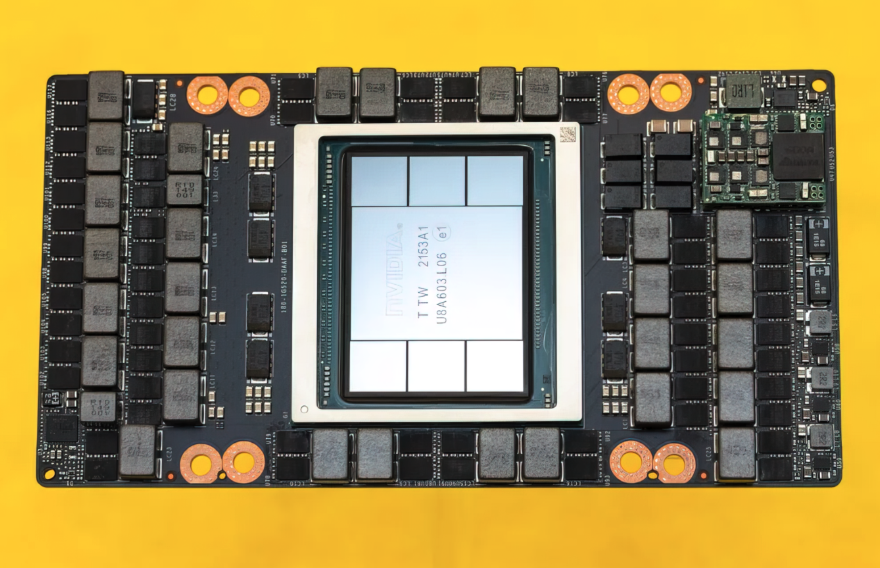
Something kind of cool happened yesterday, and it flew under the radar for most people. CME Group, the giant Chicago exchange where traders buy and sell futures on oil, corn, and cattle, said it's adding a new item to the menu: computer power.
Yeah. The stuff that runs AI. You'll be able to trade it.
Starting October 5, assuming regulators sign off, there will be futures contracts tied to the cost of renting Nvidia's AI chips. Two chips in particular, the H100 and the newer B200. If you follow tech at all, you've heard of these. They're the chips every AI company on earth is fighting over.
Okay, quick pause. What's a futures contract?
If the word "futures" makes your eyes glaze over, you're not alone. Here's the short version.
A futures contract is just a deal to buy or sell something at a set price on a future date. That's it.
Say you're a farmer. Corn prices bounce around all year, and you don't want to spend months growing corn only to find out the price crashed right before harvest. So you sell a futures contract in the spring that locks in your price for the fall. Now you can sleep at night.
Airlines do the same thing with jet fuel. Chocolate makers do it with cocoa. It's basically insurance against prices moving on you.
The other side of the trade is often just people betting. They think the price will go up or down and want to make money if they're right. That's fine too. The betting crowd keeps the market busy, which makes it easier for the farmers and airlines to find someone to trade with.
So why do this with computer chips?
Because renting AI chips right now is honestly a mess.
There's no sticker price. Most companies don't buy these chips outright, they rent time on them from cloud providers and data centers. And what you pay depends on who you are, when you asked, how long you're committing for, and frankly how good you are at negotiating.
Two companies can rent the exact same chip and pay totally different amounts. And neither of them knows if they got a good deal, because there's no public price to compare against. Imagine buying gas if every station charged a secret price it made up on the spot. That's kind of the situation.
How the new thing works
A firm called Silicon Data has been tracking what people actually pay to rent these chips, hour by hour, across a bunch of providers. They roll all of that into an index, which is just a fancy word for an average number that updates constantly.
The new futures trade against that index. Each contract covers one month of rent for a single chip. And here's the fun part: no actual hardware ever changes hands. Nobody ships you a graphics card. When the contract ends, everything settles in cash based on where the index landed.
So it's less "buying a chip" and more "betting on the price of chips," the same way oil traders almost never touch an actual barrel of oil.
Who actually uses this?
A few groups.
AI companies that are scared rental prices will spike can lock in today's rate and budget like normal businesses. Data centers that are scared prices will crash can protect themselves on the way down. Both sides get to stop guessing.
And then regular investors get a new toy. Until now, if you wanted to bet on the AI boom, you bought Nvidia stock or maybe shares in some data center company. Now you can bet on the price of the computing power itself. No stock, no servers, no warehouse in Virginia. Just the number.
The oil comparison everyone keeps making
Every person quoted about this brings up oil, and it's not a bad comparison. Oil started out as literal barrels of stuff. Then a giant market of contracts and hedges grew up around it, and that market ended up shaping the whole global economy.
The people behind this launch think computing power is walking the same path. One trading firm boss went as far as saying compute will end up being the biggest commodity in the world.
Big claim. Maybe it ages well, maybe it doesn't.
One last thing
CME isn't even alone here. Its big rival, ICE, is cooking up its own version of compute futures. And the announcement landed right as Wall Street is pouring silly amounts of money into AI infrastructure. Everyone is circling the same idea from different angles.
So step back for a second. The same exchange where people trade cattle and crude oil just decided that raw computing power belongs on the list too. Whether or not you ever touch a futures contract, that tells you something. The finance world has decided AI's fuel is a real commodity now.
And they're building the gas station.