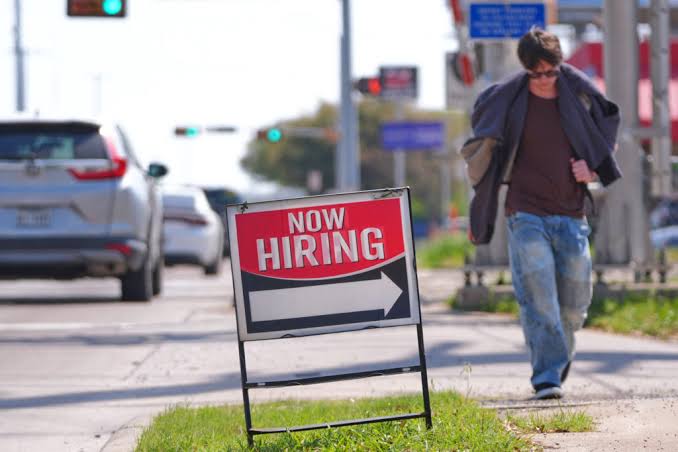
On Friday, the government said the U.S. economy lost 23,000 jobs in July. That's the first time the country has lost jobs since February. Economists thought we'd add somewhere between 80,000 and 95,000. On top of that, the numbers for May and June got revised down by a combined 103,000 jobs. So hiring wasn't just weak last month. It's been weak for a while.
And yet, by the end of the day, the S&P 500 closed at an all-time high. Up 0.6%, to 7,757. The Nasdaq did even better.
If that feels backwards to you, you're not alone. Bad news for workers, and Wall Street celebrates. What's going on?
It's all about the Fed
The stock market doesn't really react to news. It reacts to what the news means for interest rates. And right now, everything comes down to what the Federal Reserve does at its meeting in September.
Here's the situation. Inflation has been running above 3% for most of the year, partly because oil prices jumped after the conflict with Iran disrupted shipping in the Strait of Hormuz. The Fed has kept interest rates where they are, and the big worry on Wall Street wasn't about rate cuts getting delayed. The worry was that the Fed might actually raise rates to fight inflation. Higher rates make it more expensive to borrow money, which is bad for company profits and bad for stocks.
The only reason the Fed could even think about raising rates was that the job market looked strong. If companies are hiring, the thinking goes, the economy can handle it.
Friday's report changed that. One investment strategist called it a "game changer." If the job market is this weak, the Fed probably can't raise rates without making things worse. By the end of the day, traders were betting there's about a 60% chance the Fed stays put in September.
So the logic goes like this. Fewer jobs means less pressure on the Fed to raise rates. That means borrowing stays cheap for longer. And cheap money is good for stocks, especially tech stocks.
It sounds cold, and honestly, it is. Traders even have a phrase for it: bad news is good news. Usually they say it when weak numbers make a rate cut more likely. This time it's about a rate hike becoming less likely. Same idea either way.
The stock market is not the economy
That explains Friday. But it doesn't explain how stocks got to record highs in the first place while hiring slowed this much.
The S&P 500 doesn't measure how American workers are doing. It measures how 500 big companies are doing, and a few giant tech companies count for way more than everyone else. Those companies are doing great. Earnings this quarter are growing at the fastest pace since 2021. Nvidia and Broadcom, which sell the chips behind the AI boom, both went up on Friday. Airbnb jumped about 17% after a strong earnings report.
Companies can make a lot of money without hiring a lot of people. That's basically what's happening right now. Profits are up, hiring is flat, and the stock market only cares about the first one.
Even the one number in the report that looked good really wasn't. The unemployment rate fell from 4.2% to 4.1%, but only because more people stopped looking for work. Over the last three months, the economy has added about 20,000 jobs a month on average, which is very little. One economist called the report "bleak." The market went up anyway.
Why this can't last forever
Here's the catch. Bad news is only good news if the bad news stays small.
One weak jobs report that keeps the Fed from raising rates? The market is fine with that. But if job losses keep coming, people spend less, company profits fall, and then low rates won't save anyone. A few strategists warned about this on Friday. An economy where fewer people are working is not a good long-term bet, no matter what the Fed does. At some point, bad news is just bad news.
There's also a more immediate test coming. New inflation numbers come out this week, and forecasters expect prices to be up about 3.4% from a year ago. If inflation comes in hotter than that, the fear of rate hikes comes right back, and Friday's rally could fade fast.
So if your 401(k) just hit a record the same week your company froze hiring, both things are real. The market is betting on cheap money and big tech profits. The jobs report is telling you what's actually happening to workers. Those are two very different stories right now, and they can't stay that far apart forever. Eventually one of them gives.